Ever felt that rush of excitement when you truly connect with someone in their native tongue, even if it’s just for a moment? I absolutely love that feeling, and I’ve found that the fastest way to get there, especially in a new language, is by mastering the numbers.
Imagine wandering through the stunning streets of Sibiu or confidently navigating a bustling market in Bucharest, counting out your purchases with ease.
It’s a total game-changer for your travel experience! With Romania’s incredible rise as a hot spot for everything from breathtaking landscapes and ancient castles to a thriving digital nomad scene, speaking even a little bit of the language, starting with numbers, will make your experience unbelievably richer.
I’ve personally seen how just a few simple phrases can transform an ordinary trip into an extraordinary adventure, dissolving awkward moments and building genuine bridges with the locals.
Forget relying solely on translation apps; learning the basics yourself not only boosts your confidence but also shows a sincere respect that Romanians truly appreciate.
So, if you’re ready to unlock a whole new level of cultural immersion and make your Romanian adventures truly unforgettable, let’s dive into the fascinating world of Romanian numbers and get you speaking like a local in no time!
Unlocking the Basics: Your First Ten Steps into Romanian
Zero to Ten: Your Core Vocabulary
When I first touched down in Romania, I was brimming with excitement, but also a tiny bit nervous about the language barrier. I mean, my entire vocabulary was “hello” and “thank you,” which is great for niceties, but not so much for ordering a coffee or asking for directions.
My personal breakthrough, and honestly, the fastest confidence booster, came from diving headfirst into the numbers. It felt less daunting than complex grammar, and the immediate practical application was incredibly rewarding.
I started with the absolute basics, the numbers from zero to ten, drilling them into my brain whenever I had a spare moment. Trust me, being able to count out “un leu” (one leu) or “două cafele” (two coffees) made me feel like a local, even if just for that moment.
It’s truly amazing how a handful of words can open up so many interactions, allowing you to move beyond gestures and into genuine conversation. I remember feeling so proud when I could correctly point to an item and say “trei” (three) without hesitation.
This foundation is not just for transactions; it’s for understanding schedules, prices, and even just the casual banter around you. It sets the stage for everything else you’ll want to learn and explore.
Mastering Pronunciation: Sounds That Stick
Now, let’s be real, Romanian pronunciation can look a bit intimidating on paper, especially with those unique diacritics. But here’s the thing I learned: it’s actually quite phonetic once you get the hang of it.
My biggest tip? Don’t be afraid to sound things out, even if you feel silly at first. I used to walk around my apartment muttering “unu, doi, trei” until it rolled off my tongue naturally.
The key is to listen, listen, listen! I found countless YouTube videos and apps that had native speakers articulating each number clearly. Mimicking them, even if it meant exaggerating the sounds, helped me lock in the correct pronunciation.
For example, the “ă” in “unu” (one) is a common sound in Romanian, similar to the ‘a’ in ‘about’ or ‘comma’ – a super relaxed, almost lazy ‘uh’ sound.
Getting these little nuances right isn’t just about being accurate; it’s about being understood and showing respect for the language. Plus, when you pronounce things correctly, people are more likely to engage with you, which is exactly what we want, right?
It really boosted my confidence when locals responded positively because they understood what I was trying to say. This initial effort in pronunciation pays dividends, believe me.
Beyond the Single Digits: Conquering Teens and Twenties
Building Blocks: From Eleven to Nineteen
Once you’ve got those first ten numbers down, you’re ready to tackle the teens, and honestly, it’s not as tricky as it sounds! Romanian teens build directly on the single digits, much like in English, but with a super cool, almost poetic structure.
Think of it as “number-over-ten.” For example, “eleven” is “unsprezece” which literally means “one over ten.” See? It starts to make sense, and once you grasp that pattern, you can unlock a whole new set of numbers with minimal effort.
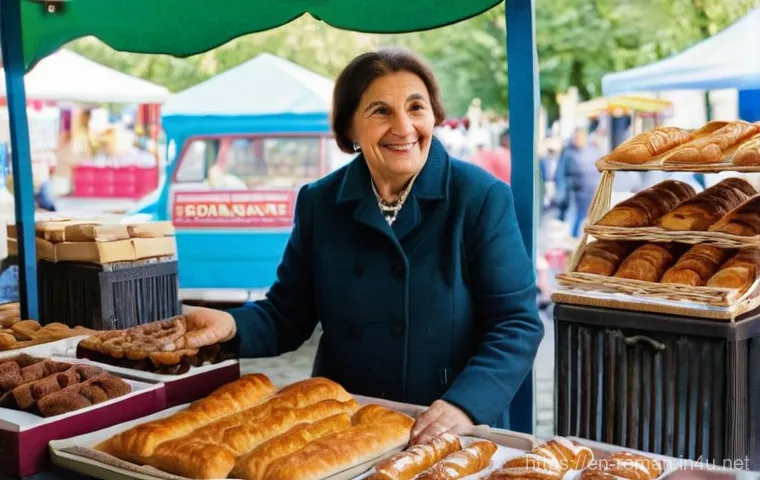
I remember feeling a genuine surge of accomplishment the first time I correctly ordered “doisprezece” (twelve) pastries at a local Sibiu bakery. It’s these small victories that truly fuel your motivation and push you to learn more.
Don’t be shy about sounding them out; sometimes I’d even mumble them to myself while waiting in line, just to get that muscle memory going. This stage of learning really opens up more complex interactions, letting you talk about ages, quantities in recipes, or even bus numbers without missing a beat.
Leaping to Twenty: Understanding the “Zeci”
Then comes the leap to twenty, thirty, and so on. This is where you introduce the concept of “zeci,” which means “tens.” It’s another beautiful pattern that, once recognized, makes counting a breeze.
For instance, “twenty” is “douăzeci” (two tens), “thirty” is “treizeci” (three tens). It just clicks! I found this particularly useful when haggling for souvenirs in Brasov, where knowing the tens allowed me to quickly understand and respond to prices.
The real magic happens when you combine these “zeci” with your foundational numbers. For “twenty-one,” you simply say “douăzeci și unu” (two tens and one).
The “și” (and) is your little connector. I recall a moment when I needed to pay “patruzeci și cinci” (forty-five) lei for a taxi, and the driver’s surprised smile when I said it correctly was absolutely priceless.
It’s those tiny interactions that truly make you feel like you’re not just a tourist, but someone genuinely trying to connect with the local culture. It’s an empowering feeling that translation apps just can’t replicate.
Counting Your Way Through Daily Life in Romania
Shopping Sprees and Market Bargains
One of my absolute favorite ways to practice my Romanian numbers was at the local markets. Imagine strolling through a vibrant market in Bucharest, surrounded by fresh produce and artisan crafts.
You spot a beautiful hand-carved spoon, and the vendor tells you the price. Instead of fumbling for your phone, you can confidently ask “Cât costă?” (How much does it cost?) and understand their reply when they say “treizeci de lei” (thirty lei).
That feeling of independence? Unbeatable. I’ve personally found that even if my grammar was a bit wobbly, getting the numbers right instantly put a smile on vendors’ faces.
It signals genuine effort and respect for their culture. It’s not just about getting a good deal; it’s about the human connection forged over a shared moment of understanding.
From buying fresh bread for “cinci lei” (five lei) to picking up “două” (two) bottles of local wine, numbers are your best friend for a smooth and enjoyable shopping experience, making you feel less like an outsider and more like a savvy local.
Telling Time and Making Plans
Beyond shopping, numbers are indispensable for navigating your day. Thinking about catching a train? You’ll need to understand “ora” (hour) and “minute” (minutes).
“Trenul pleacă la șapte” (The train leaves at seven). Want to meet a new friend for coffee at “trei după-amiază” (three in the afternoon)? Knowing your numbers makes all these arrangements incredibly smooth.
I’ve definitely had my share of comical miscommunications when I relied too heavily on gestures, so trust me, knowing these basics saves a lot of potential headaches.
From understanding hotel check-out times to figuring out when the next bus is due, the ability to process numerical information in Romanian gives you a profound sense of control and ease in your travels.
It helps you stay on schedule and truly immerse yourself in the local rhythm, rather than constantly checking your translation app or relying on others.
My Secret Sauce: Hacks for Remembering Romanian Numbers
Memory Tricks I Swear By
Let’s get real, rote memorization can be a drag. So, I’ve cooked up a few little tricks that really helped these numbers stick in my brain. One thing I did was associate numbers with things I already knew.
For example, “doi” (two) sounds a little like “Dwayne” – so I’d picture “Dwayne ‘The Rock’ Johnson holding up two fingers.” Silly, I know, but it worked!
For “patru” (four), I’d think of “four” cats sleeping on a “pat” (bed – close enough for my brain!). Another great method is using flashcards, but with a twist: write the number on one side, and on the other, draw a little picture or write a short phrase that helps you remember it.
I also love using songs; there are tons of children’s songs online that teach numbers, and honestly, if it works for kids, it works for me! Don’t underestimate the power of a catchy tune to embed those sounds and meanings deeply.
Experiment with what resonates with you; the goal is to make learning fun and less like a chore.
Practice Makes Perfect: Integrating into Your Routine
The biggest game-changer for me wasn’t just learning them, but *using* them constantly. I’d count everything around me – stairs, cars, items in my grocery cart.
Seriously, everything! When I was out and about, I’d try to identify prices in Romanian without even planning to buy anything. This constant, low-stakes exposure gradually transformed those numbers from abstract concepts into concrete, usable words.
I even started setting my phone’s language to Romanian for a few hours each day, just to see the numbers in a different context. Engaging with native speakers, even just by asking “Câți ani ai?” (How old are you?) or counting out items, is invaluable.
Don’t worry about being perfect; Romanians genuinely appreciate the effort. It’s about building confidence through consistent application. The more you use them, the more natural they become, until you find yourself effortlessly counting in Romanian without even thinking about it.
The Finer Points: Gender, Agreement, and Context

Numbers with a Twist: When Gender Matters
Alright, here’s where Romanian numbers get a little bit spicy, but in a totally manageable way! Unlike English, some Romanian numbers actually change based on the gender of the noun they’re counting.
Specifically, “one” and “two” (and composite numbers ending in them) have different forms for masculine and feminine nouns. For example, you say “un băiat” (one boy – masculine) but “o fată” (one girl – feminine).
Similarly, it’s “doi câini” (two dogs – masculine) but “două pisici” (two cats – feminine). I’ll be honest, this tripped me up a few times initially, especially when trying to count mixed groups of items.
My trick was to mentally pair “un/o” and “doi/două” with example nouns until it became automatic. It’s a small detail, but getting it right shows a deeper understanding of the language and earns you extra kudos from locals.
Don’t let this scare you; it’s a consistent rule, and once you practice it a bit, it becomes second nature.
Slightly More Complex: Ordinal Numbers
Once you’ve mastered the cardinal numbers (one, two, three), you might find yourself needing ordinal numbers (first, second, third) – for example, for directions or describing a sequence of events.
These follow a slightly different pattern. “Primul/prima” (first, masculine/feminine), “al doilea/a doua” (second), “al treilea/a treia” (third), and so on.
They also agree in gender and sometimes case with the noun they modify. I remember trying to find a specific floor in a building and needing to ask for “etajul al doilea” (the second floor).
It felt like leveling up my language skills! While cardinal numbers are your daily bread, knowing a few ordinal numbers opens up new avenues for detailed communication, allowing you to describe rankings, floor numbers, or historical events with greater precision.
Don’t rush into these; get comfortable with your cardinals first, and then dip your toes into ordinals when you feel ready.
Why These Little Words Make a Huge Difference to Your Trip
Connecting with Locals: More Than Just Transactions
Let me tell you, it’s about so much more than just counting money or telling time. Being able to use Romanian numbers, even just the basics, transforms your entire experience.
I’ve personally found that locals immediately warm up to you when you make an effort with their language. It’s a sign of respect, an acknowledgment of their culture, and it genuinely breaks down barriers.
I’ve had taxi drivers offer me tips on local sights, shopkeepers throw in a little extra something with my purchase, and restaurant staff engage in friendly banter, all because I took the time to say “mulțumesc” (thank you) and count out my “lei” (currency) in Romanian.
These aren’t just transactions anymore; they become mini-cultural exchanges. It’s a bridge to deeper connections, and those are the moments that truly make a trip unforgettable, moving you beyond the surface-level tourist experience.
Boosting Your Confidence: Navigating Like a Pro
Honestly, nothing beats the feeling of self-reliance when you’re traveling. When I can confidently understand prices, ask for “unu” (one) of something, or comprehend a bus schedule, it elevates my confidence immensely.
It means I’m not constantly glued to my phone for translations or anxiously looking for English speakers. That freedom allows me to be more present, to soak in the sights and sounds, and to truly explore without hesitation.
I remember feeling a bit lost once, needing to ask for directions, and being able to understand the number of blocks or turns in Romanian was a huge relief.
This isn’t just about showing off; it’s about empowerment. It’s about navigating an unfamiliar city with a sense of calm and capability, knowing you can handle everyday situations on your own.
It truly allows you to be an active participant in your adventure, rather than just an observer.
Money Matters: Handling Lei with Ease
Understanding the Romanian Currency
Navigating currency can sometimes be a bit confusing in a new country, but with your newfound number skills, handling Romanian Lei (RON) will be a breeze.
The Lei comes in various denominations, and you’ll encounter banknotes of 1, 5, 10, 50, 100, 200, and 500 Lei, along with smaller coins called “bani” (1 Leu = 100 bani).
I vividly recall the first time I confidently counted out “douăzeci de lei” (20 lei) for a delicious street food snack. Understanding the value of each note and being able to state it in Romanian made every purchase smoother and more transparent.
Knowing your numbers helps you quickly verify change and avoid any potential misunderstandings, ensuring you always get exactly what you pay for. It’s not just about language; it’s about financial literacy in a foreign land, which is a key part of stress-free travel.
Counting Your Change: Practical Scenarios
This is where all your hard work really pays off! When you’re making a purchase, whether it’s a souvenir, a meal, or a bus ticket, being able to quickly process the numbers involved means you’re always on top of your finances.
If something costs “treizeci și cinci de lei” (35 lei) and you hand over a “cincizeci de lei” (50 lei) note, you can anticipate receiving “cincisprezece lei” (15 lei) in change.
That instantaneous mental calculation in Romanian? Pure gold. It saves you from that awkward moment of staring blankly at your change, trying to figure out if it’s correct.
I’ve personally felt much more relaxed knowing I could confidently manage my money, asking “Cât este restul?” (How much is the change?) and understanding the numerical response.
This practical application cements your learning and makes you feel truly at home in a Romanian economic environment.
| Number | Romanian Word | Pronunciation Guide (Approximate) |
|---|---|---|
| 0 | Zero | ZEH-roh |
| 1 | Unu (masculine), O (feminine) | OO-noo / OH |
| 2 | Doi (masculine), Două (feminine) | DOY / DOH-uh |
| 3 | Trei | TRAY |
| 4 | Patru | PAH-troo |
| 5 | Cinci | CHINCH |
| 6 | Șase | SHAH-seh |
| 7 | Șapte | SHAHP-teh |
| 8 | Opt | OPT |
| 9 | Nouă | NOH-uh |
| 10 | Zece | ZEH-cheh |
| 11 | Unsprezece | OON-spreh-ZEH-cheh |
| 20 | Douăzeci | DOH-uh-ZEHCH |
| 100 | O sută | OH SOO-tuh |
Wrapping Things Up
And there you have it, fellow adventurers! Diving into Romanian numbers might seem like a small step, but trust me, it’s a giant leap for your travel experience. I’ve personally witnessed how a little effort in speaking the local language can transform ordinary moments into unforgettable memories. It’s about more than just transactions; it’s about genuine connection, boosting your confidence, and truly immersing yourself in the beautiful tapestry of Romanian culture. So, don’t be shy! Embrace the challenge, practice these sounds, and watch how doors open and smiles broaden wherever you go. You’ve got this!
Useful Information to Know
1. Immerse Yourself in Romanian Media: One of the most effective ways I found to solidify my understanding of Romanian numbers, and indeed the language as a whole, was by tuning into local media. Try watching Romanian news channels, listening to local radio stations, or even finding simple children’s shows online. You’ll naturally hear numbers used in various contexts – dates, times, prices, and statistics. It’s a low-pressure way to expose yourself to native pronunciation and context, far beyond what textbooks can offer. This passive learning technique is surprisingly powerful; I noticed myself picking up subtle intonations and speed variations that helped me sound more natural when I spoke. Plus, it’s a fantastic way to learn about current events and popular culture, further deepening your immersion. This daily exposure, even for just 15-20 minutes, makes a huge difference in making the numbers stick. It’s truly a game-changer for long-term retention and overall language fluency.
2. Practice Role-Playing Everyday Scenarios: Don’t wait until you’re in Romania to practice! Grab a friend, a family member, or even just talk to yourself in the mirror and simulate real-life interactions. Imagine you’re at a market, buying groceries, ordering food, or asking for directions. Use your Romanian numbers as much as possible in these scenarios. For instance, “I’d like three apples, please” (Aș dori trei mere, vă rog) or “The total is twenty-five lei” (Totalul este douăzeci și cinci de lei). This active recall and application will help you quickly identify gaps in your knowledge and build muscle memory for common phrases. I used to pretend I was ordering an elaborate meal, mentally calculating the cost and practicing saying the numbers aloud. It felt a bit silly at first, but it dramatically boosted my confidence for when I actually faced these situations. The more you rehearse, the more natural and automatic your responses will become, reducing hesitation when it truly matters.
3. Befriend a Language Exchange Partner: While apps and self-study are great, nothing beats interaction with a native speaker. Seek out a language exchange partner online or through local cultural centers. They can provide immediate feedback on your pronunciation and usage, which is invaluable. I connected with a wonderful Romanian student online, and we’d spend an hour each week chatting – half in English, half in Romanian. She patiently corrected my number usage and even taught me slang. This personalized guidance helped me understand the nuances of gender agreement with numbers “un/o” and “doi/două” in a way that written explanations never quite did. It’s also a fantastic cultural exchange, giving you insights into daily life in Romania directly from someone living it. Their encouragement and real-world examples make the learning process so much more engaging and effective than going it alone.
4. Leverage Apps for Spaced Repetition and Drills: In today’s digital age, there’s no excuse not to use technology to your advantage. Download language learning apps that incorporate spaced repetition systems (SRS) specifically for vocabulary and numbers. Apps like Duolingo, Memrise, or Anki are fantastic for drilling numbers in various contexts, from simple counting to quick calculations. The beauty of SRS is that it shows you flashcards at optimal intervals, helping you commit information to long-term memory. I used to do a quick 10-minute number drill every morning with an app while having my coffee. It was a consistent, manageable way to reinforce what I’d learned and fill in any gaps. The gamified elements in many of these apps also make learning enjoyable and less like a chore. Don’t underestimate the power of consistent, bite-sized practice when trying to master something as foundational as numbers.
5. Pay Attention to Contextual Clues: When you’re in Romania, keep your ears open and pay close attention to the context in which numbers are used. If a vendor holds up two fingers and says “două,” you’ve got a clear visual and auditory cue. Watch how prices are displayed, listen to announcements at train stations, and observe how people talk about quantities. Your brain is incredibly good at picking up patterns and making associations when given enough contextual information. I often found myself making mental notes of numbers I heard, even if I wasn’t directly involved in the conversation. For example, if I heard someone say “opt” while looking at a clock, I’d know they were referring to ‘eight.’ This active observation sharpens your listening skills and helps you connect the abstract number to its real-world application, making it less about memorization and more about natural understanding. This real-world exposure accelerates your learning significantly.
Key Takeaways
Mastering Romanian numbers from zero to ten is your essential first step for an enriching trip. Focus on pronunciation early, and remember that numbers like ‘un/o’ and ‘doi/două’ change based on gender. Integrate practice into daily life through shopping, telling time, and even using memory tricks. This foundational knowledge isn’t just about practical transactions; it’s a powerful tool for connecting with locals, boosting your confidence, and truly immersing yourself in Romania’s vibrant culture.
Frequently Asked Questions (FAQ) 📖
Q: Why is getting a grip on Romanian numbers so incredibly important for travelers?
A: Oh, trust me, this isn’t just about sounding fancy – it’s about unlocking a whole new level of experience! From my own travels, I’ve seen firsthand how simply knowing a few numbers can totally transform your interactions.
Imagine confidently asking for the price of that beautiful hand-painted ceramic in a bustling Sibiu market, or smoothly figuring out bus schedules to explore a hidden gem in Transylvania.
It instantly breaks down barriers. Locals genuinely appreciate the effort you make to speak even a little of their language, and numbers are such a fundamental building block.
It shows respect and opens doors to more authentic conversations and real connections. Plus, let’s be honest, it boosts your confidence like crazy! No more awkward fumbling with translation apps or relying solely on gestures when you can just count it out yourself.
It’s a game-changer for cultural immersion and making those unforgettable memories.
Q: What are some practical, real-life situations where knowing Romanian numbers will actually save the day?
A: So many! I’ve been in countless situations where even basic numbers were absolute lifesavers. Picture this: you’re at a piață (market) in Bucharest, haggling for some fresh fruit.
Knowing the numbers helps you understand prices, compare deals, and even politely negotiate. Or, let’s say you’re ordering at a charming local restaurant – being able to say “două beri” (two beers) or “trei cafele” (three coffees) makes things so much smoother.
Need to catch a train? Understanding departure times or platform numbers is crucial. When I was looking for a specific address, knowing the street numbers made navigating a breeze, rather than wandering aimlessly.
And don’t even get me started on exchanging currency! Romania uses the Leu (RON), and knowing numbers helps you quickly verify exchange rates and count your change, making sure you’re not getting short-changed.
It’s all about feeling empowered and independent, not just another tourist relying on others.
Q: Learning a new language can feel super daunting. How easy is it to pick up Romanian numbers, and what’s the best way to get started?
A: I totally get it – that initial hurdle can feel huge! But here’s the amazing news: Romanian numbers are actually quite straightforward once you get the hang of the first few.
From my experience, the numbers from one to ten are the foundation, and honestly, they’re pretty quick to memorize. Then, patterns start emerging, especially as you go higher.
Many online resources, like simple YouTube tutorials or language apps, offer fantastic ways to learn and practice pronunciation. I’d recommend starting with numbers 1-20, repeating them out loud, and then gradually building up to 100.
Flashcards are your best friend here! Try to associate the numbers with everyday objects or situations, like counting items in your shopping cart. Don’t aim for perfection right away; just aim for progress.
The satisfaction you get when you successfully use a Romanian number in a real conversation is truly an incredible feeling – it’s totally worth the small effort!